
Ella Langley Haircut Guide: The Viral Bangs
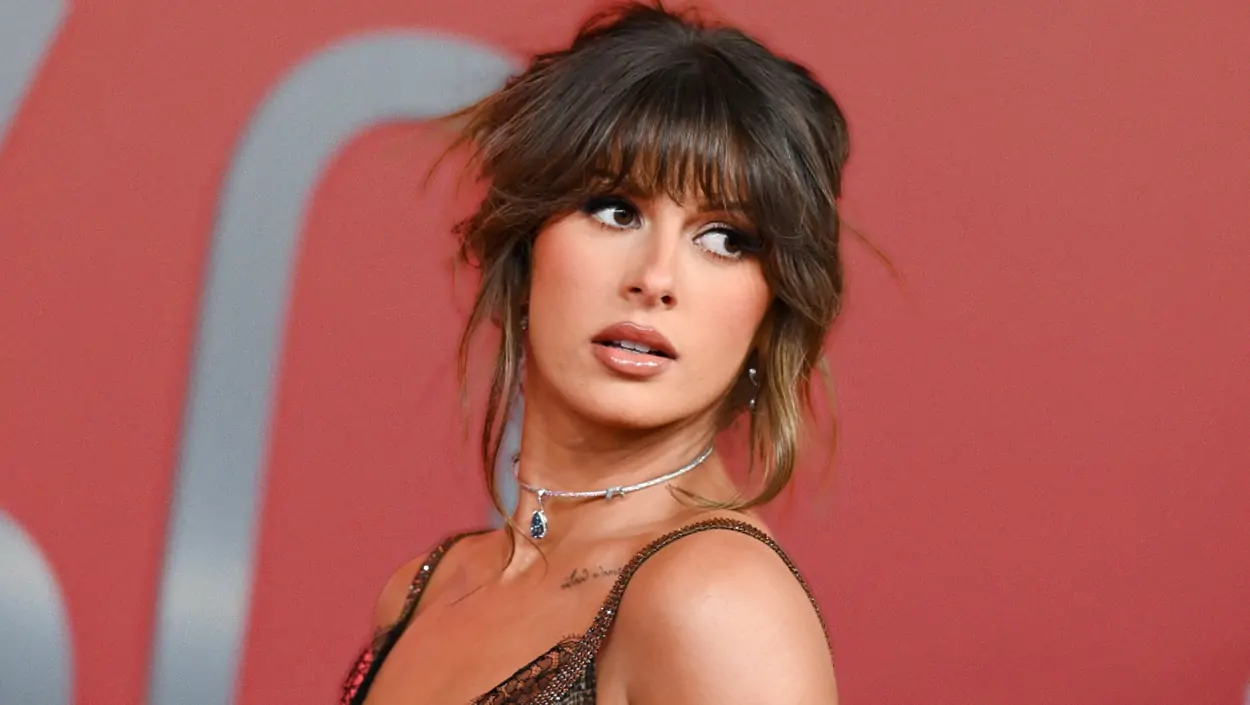
Why Ella Langley’s Hair Is Everywhere Right Now
Ella Langley — Billboard Women in Music 2026
- Ella Langley receives the Powerhouse Award at Billboard’s 2026 Women in Music ceremony.
- The event takes place April 29, 2026 at the Hollywood Palladium in Los Angeles.
- Hosted by Keke Palmer, the show streams live on Billboard.com and Billboard’s YouTube channel.
- Fellow honorees include Tate McRae, Teyana Taylor, Kehlani, Laufey, and Zara Larsson.
The Alabama singer who topped the Billboard Hot 100 with “Choosin’ Texas” has become something else entirely in the past year: a hair icon.
Search “Ella Langley bangs” on TikTok and you get millions of results. Women filming themselves cutting their own fringe in kitchen bathrooms. Salon stylists posting “Ella inspired” transformation reels. Hair color chemists breaking down her exact brunette formula on Instagram.
It’s the kind of cultural moment that happens maybe once a decade in country music. Lainey Wilson had the bell bottoms. Dolly Parton had the wig. Ella Langley has the bangs.
And before you see Langley on The Dandelion Tour this summer, here’s everything you need to know about the cut that’s defining her era.
What Is the Ella Langley Haircut Called?
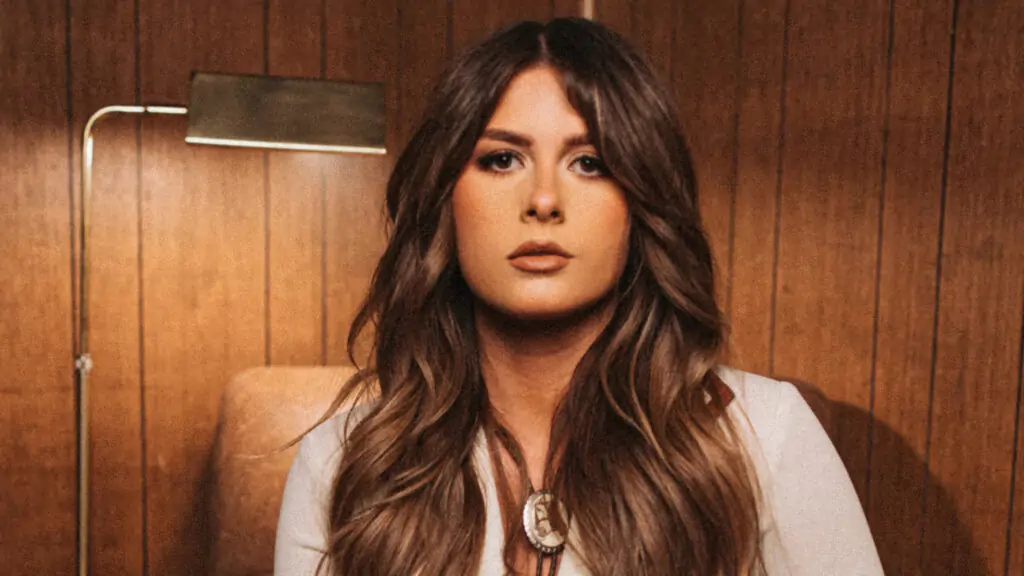
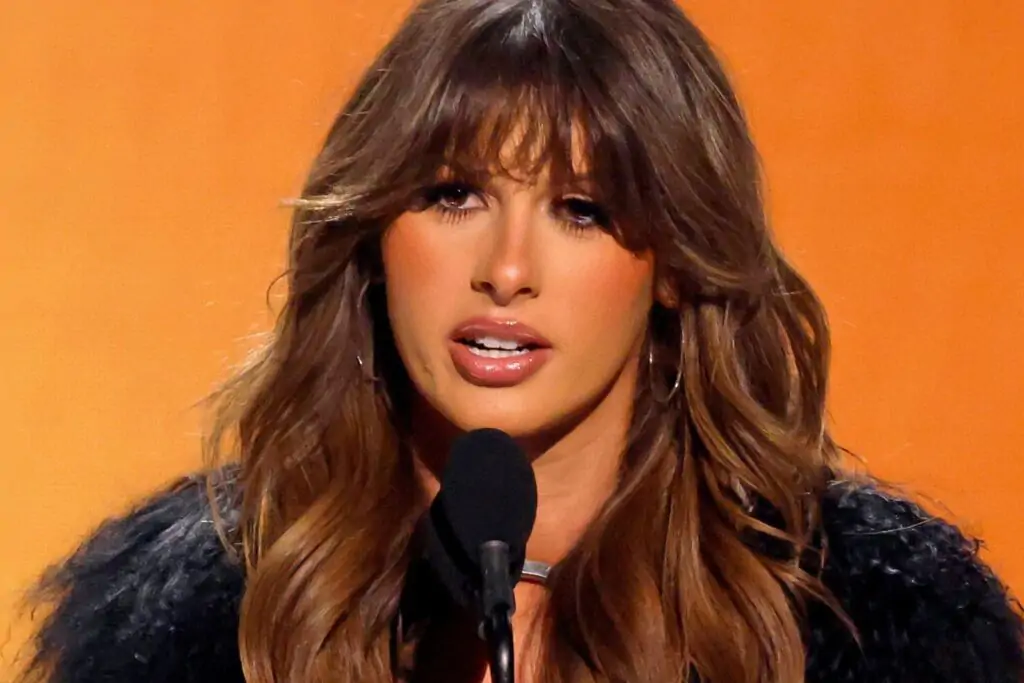
The technical name is a long layered butterfly cut with a wide arched fringe.
In salons across the country, it’s being requested simply as “the Ella” or the “Ella Langley cut” partly because the proportions are specific enough to warrant their own name.
The cut has three main components working together:
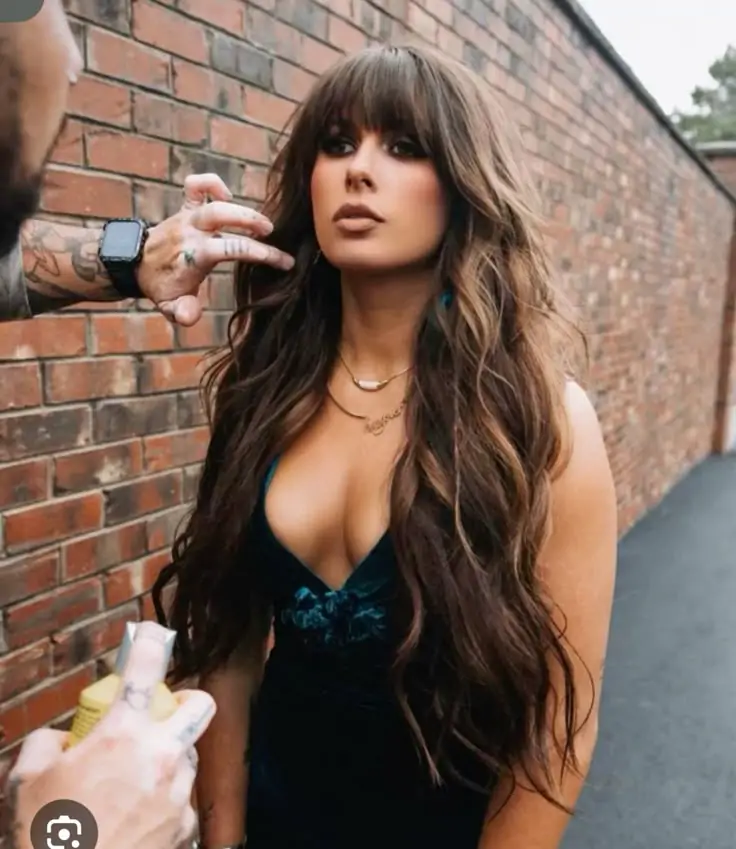
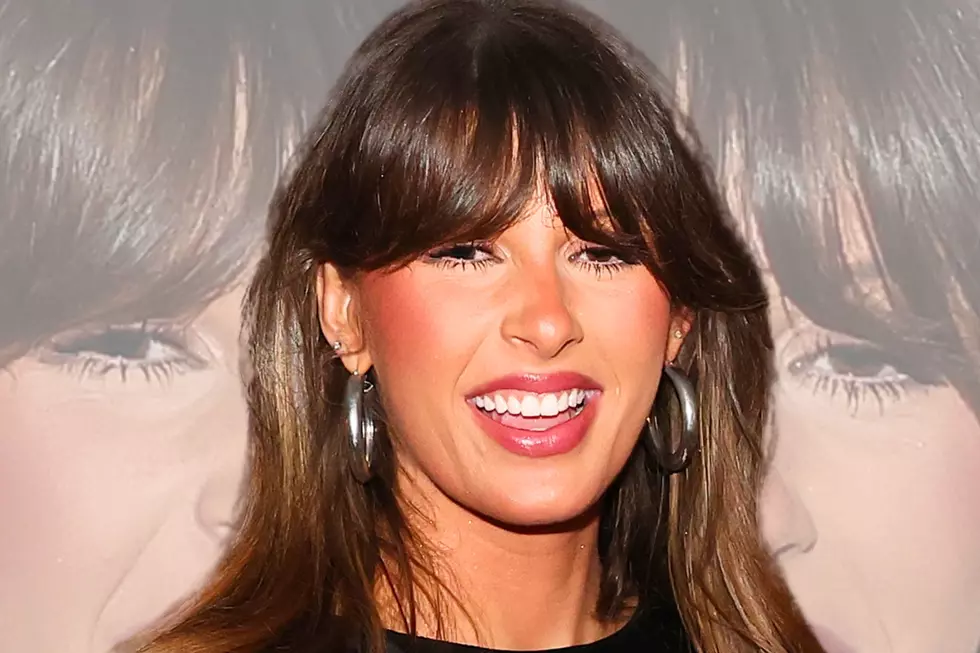
The “Ella” Fringe: Wide set, thick bangs cut from a wide triangle section that reaches toward the recession line at the temples. They arch slightly, shorter at the center and longer at the edges, where they blend into the face framing layers. This is not a standard straight across fringe the section starts much further back than most bangs cuts, which is what gives her face that unusually open, striking frame.
The C-Shape Layers: Heavy, inward curving face framing layers that fall from the cheekbone toward the collarbone. When you look at her from the front, the shape curves in like the letter C. This is sometimes called a “C cut” or “curve cut” in the industry.
90s Butterfly Layers: Internal layers throughout the back of the hair that create the signature volume and bounce. This element draws from the butterfly haircut a layering technique that combines shorter, lifted crown layers with longer, sweeping back sections. Think of it as the updated version of the supermodel volume that dominated the early 1990s.
Together, the three components create a silhouette that looks simultaneously high volume, face framing, and effortlessly lived in.
The Backstory: A Panic Haircut That Changed Everything
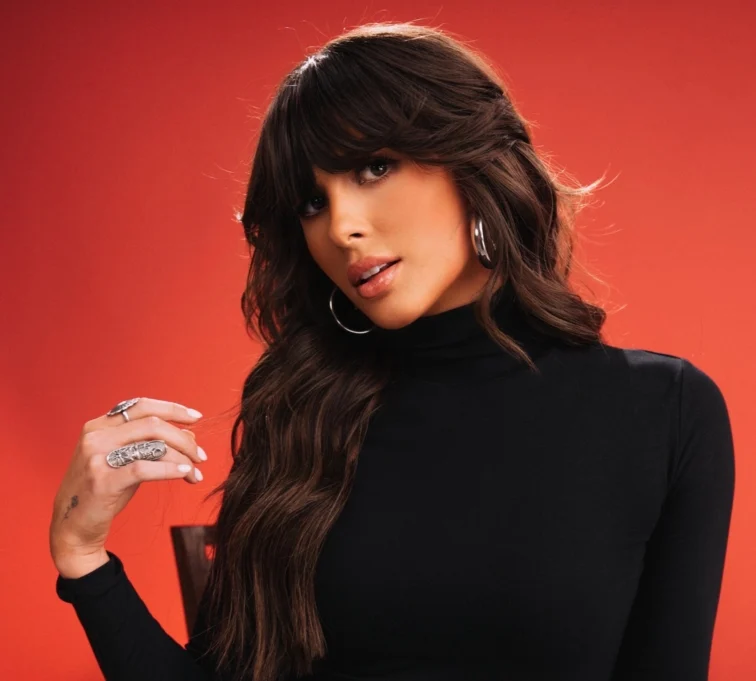
Here’s the part no one expected: the most famous fringe in country music was a mistake.
Langley had been on the road in Oregon, deep into a long touring stretch. She had “little side bangs not really bangs,” she later described ahead of the CMA Awards. Stressed and short on time before a show, she grabbed a pair of scissors and started cutting. It went immediately wrong.
“It was so bad. Like genuinely, how am I gonna play a show like this,” she said, holding up her thumb and forefinger to show how short she’d chopped. Her hairdresser took one look and gave the most Nashville advice possible: “Bruh, you just gotta send it.”
So she went on stage. The crowd responded. The moment stuck. And Ella Langley went from having side swept fringe to having the most requested bang in country music.
She thought she’d grow them out. That never happened. “I don’t think I’m ever allowed to grow my bangs out,” she said later, laughing. When CMT asked her in June 2025 how much the bangs had influenced her success, she didn’t hesitate: “A lot. I’d say at least 30%.”
The “Wide Triangle” Technique What Your Stylist Needs to Know
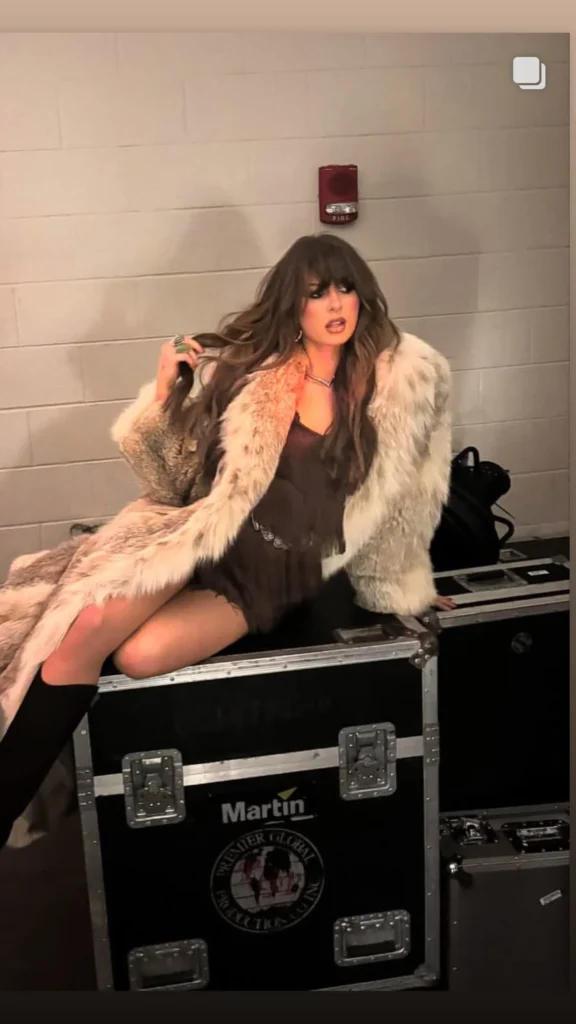
Most people walk into a salon and say “I want Ella Langley bangs,” then get a standard fringe that looks nothing like hers. The reason is simple: the sectioning is different.
A conventional bang section is a small triangle taken from the center of the hairline. Langley’s fringe is cut from a significantly wider triangle that extends toward the recession lines at the temples. This wide section is what creates the “opening up” effect the fringe doesn’t crowd the brows or compress the face, it lifts and frames it.
Stylist Wayne Tuggle, who posted a widely-shared tutorial that broke down the cut in detail, explained that the “twist and raise” technique during cutting is equally important. By twisting the hair and positioning it at the right angle before cutting, the stylist creates the natural arch shape and avoids leaving the fringe too blunt or heavy at the center.
What to tell your stylist: Ask for a “long layered butterfly cut with a wide section arched fringe.” Specify that the bang section should start near the recession lines, not the center hairline. Bring a photo ideally several from different angles. The proportions are specific enough that verbal description alone rarely gets the result right.
Also ask for a soft U-shaped back, not a blunt or V cut finish. The weight needs to stay at the ends, but the back should follow a gentle curve that maintains the overall flowing silhouette.
The Eyelash Glue Hack (And Why It Works)
This is the detail most articles miss and it explains how her bangs look perfect even after two hours on stage.
Langley uses clear eyelash glue applied directly to her forehead to keep the fringe anchored during performances. She posts about it regularly on TikTok, and it’s racked up nearly 450,000 likes on one video alone. The credit, she says, goes to a Dallas Cowboys cheerleader who taught her the trick.
The glue creates a thin, flexible bond between the bang and the skin, preventing the fringe from splitting or migrating during energetic movement. It comes off cleanly with micellar water no residue, no damage to the skin or hair.
For everyday wear, a light hold pomade or styling wax on the fingertips smoothed along the bang root achieves a similar effect without adhesive. The goal is to keep the wide arch shape intact and prevent the natural tendency of thick fringe to part down the center.
How to Style “The Ella” at Home
The signature Langley blowout is achievable at home with the right technique. Here’s the breakdown:
Step 1 Rough dry first. Get the hair about 80% dry with low heat before any styling. This sets the texture and prevents the layers from going frizzy when you bring in the round brush.
Step 2 Work the crown. Use a medium round brush at the roots to create lift. Roll the brush upward and away from the face while directing warm air toward the scalp. This is where the butterfly layer volume lives you have to build it at the root or the style falls flat.
Step 3 The bang blowout. Use a small round brush under the fringe. Roll toward the face, not away. The goal is a slight inward curl at the tip this is the “bouncy” finish that separates Langley’s fringe from a blunt, flat bang. Apply focused heat for ten to fifteen seconds, then let the brush cool in place before releasing.
Step 4 The C-curve. Once the sides are dry, use a large barrel curling iron on the face framing layers, curling them inward toward your chin. This reinforces the C shape silhouette and gives the layers that signature “hug the face” movement.
Step 5 Finish with the fringe. If using eyelash glue for an event, apply a thin strip to your forehead, press the bang down into the arch shape, hold for a few seconds, then style the rest of the fringe normally over it. If skipping glue, a light fingertip application of holding wax at the root keeps the shape in place.
For the full concert ready experience, see what to wear to an Ella Langley concert and yes, the hair completes the outfit.
What Hair Color Does Ella Langley Use?
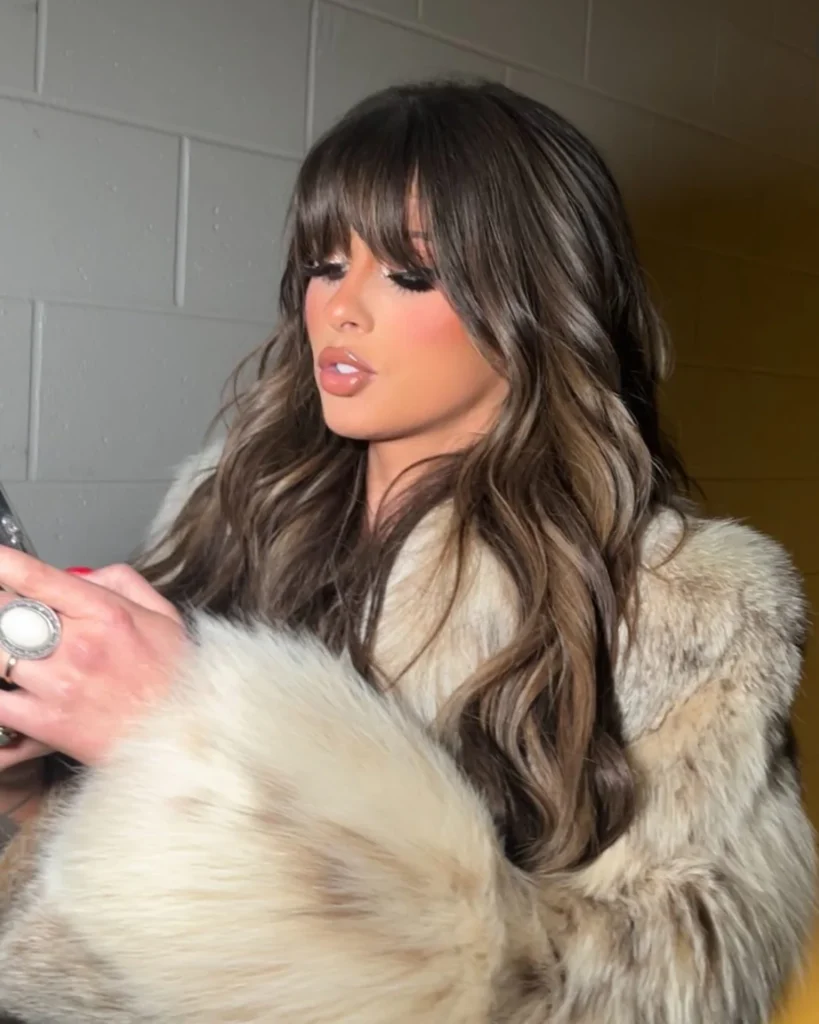
Her color is a deep, cool toned brunette what colorists are currently calling “chocolate brown” with a sophisticated blue based undertone that keeps it from reading warm or reddish under stage lighting.
The formula typically incorporates a partial balayage around the face, blending slightly lighter pieces through the faceframing layers. This creates dimension without adding obvious highlights, so the color reads as natural depth rather than a salon treatment.
Hair colorists on Instagram have been sharing her formula widely in early 2026. The consistent detail across tutorials: the base needs to lean cool blue or ash based brunette tones, not gold or copper. The warm equivalent of the same shade reads completely differently on stage and loses the dramatic, high contrast quality that makes her look so distinctive.
Extensions: The Secret to Her Concert-Stage Volume
The density that fans notice on stage is not entirely natural hair. Langley’s full performance look frequently incorporates 22 inch hand tied weft extensions a method that adds length and volume while blending seamlessly with the natural hair when the layers are cut correctly.
The key to extensions working with this particular cut is that the butterfly layers in the natural hair and the extension wefts need to be layered together not stacked separately. If the natural hair is butterfly layered and the extensions are blunt, the join shows. A stylist who is familiar with extension blending for layered cuts will know to point cut the extension wefts after installation.
For everyday wear, clip in sections at the crown and sides of the head give approximately 80% of the stage effect with significantly less commitment and cost.
Does This Cut Suit Every Face Shape?
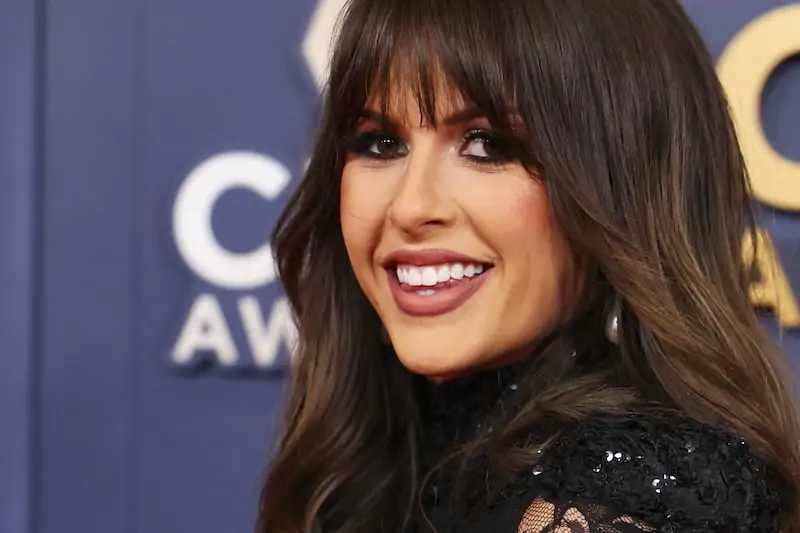
The Ella cut is unusually versatile, but the wide bang element requires some adjustment depending on your face.
Oval faces get the most faithful version of the cut. All the proportions work as designed.
Heart-shaped faces suit this cut extremely well. The wide fringe narrows the forehead visually while the C curve layers draw attention to the jawline.
Long faces benefit from the volume and the inward curving layers, which add width at the sides and bring the proportions into balance.
Round faces require one key adjustment: the face framing layers should start slightly below the cheekbone rather than at it. This elongates the face and prevents the cut from adding too much perceived width.
Square faces need softer, wispier fringe edges. Ask the stylist to point cut the tips of the bang so they feather out rather than landing in a hard line.
The one thing that matters most across every face shape: the wide section bang. Do not let a stylist default to a narrower triangle section. That changes the entire effect of the cut.
FAQ
What is Ella Langley’s haircut called? Her signature look is a long layered butterfly cut with a wide arched fringe. In salons, it is increasingly requested simply as “the Ella” or the “Ella Langley cut.” The key technical elements are a wide triangle bang section, inward curving C shape face framing layers, and 90s style internal butterfly layers for volume.
How did Ella Langley get her famous bangs? The bangs originated as an accidental self cut backstage before a show in Oregon. Langley was stressed and cut them herself, immediately regretted it, and went on stage anyway at her hairdresser’s encouragement. The reaction was so positive that the look became permanent. She has joked that she is “never allowed to grow them out.”
How does Ella Langley keep her bangs in place during concerts? She uses clear eyelash glue applied to her forehead to anchor the fringe before performing. She removes it afterward with micellar water. She credits the technique to a Dallas Cowboys cheerleader and demonstrated it in a TikTok video that received nearly 450,000 likes.
How do I ask my stylist for the Ella Langley haircut? Ask for “long internal butterfly layers with a wide section arched fringe.” Specify that the bang section should originate near the recession line at the temples, not a narrow center triangle. Bring photos. Ask for a soft U shaped back and C curve face framing layers that fall from the cheekbone to the collarbone.
What hair color does Ella Langley have? Her color is a deep, cool toned chocolate brunette with a blue based undertone. It typically includes subtle face framing balayage for dimension. The cool base is critical the same depth in a warm or golden tone produces a noticeably different result.
Does the Ella Langley haircut work for fine hair? Yes, but adjustments are needed. For fine hair, ask for slightly fewer internal layers so the cut doesn’t become too wispy or lose structure. Extensions at the crown and sides are a practical option for adding the density that makes the look most recognizable.